Metaphysical Spirituality
Article
Classification: Spiritual and philosophical tradition*Related subjects:* Consciousness, esotericism, mysticism, extraterrestrial spirituality, reincarnation, spiritual energy, starseeds, and the New Age movement
Overview
Metaphysical spirituality is a broad approach to spiritual life based on the belief that reality extends beyond the physical world. It explores consciousness, the soul, divine intelligence, spiritual dimensions, personal transformation, and humanity’s place within a larger cosmos.
Metaphysical spirituality is not a single organized religion. It includes beliefs and practices drawn from philosophy, mysticism, esoteric traditions, Spiritualism, Theosophy, Eastern religions, alternative healing movements, and modern spiritual communities.
Many followers believe that consciousness is a fundamental part of reality and that human beings possess a spiritual nature that exists alongside, or independently from, the physical body. Some traditions also propose that humanity is connected to extraterrestrial or interdimensional forms of intelligence.
Metaphysical spirituality should not be confused with metaphysics as an academic discipline. In philosophy, metaphysics examines questions about existence, identity, causation, time, possibility, and the relationship between mind and matter. The Stanford Encyclopedia of Philosophy describes metaphysics as a field whose subject matter has expanded significantly throughout its history.
Central Beliefs
Metaphysical spirituality has no universal creed. Beliefs differ among individuals, teachers, and communities. Several concepts appear frequently across its many forms.
Consciousness as a Fundamental Reality
Many metaphysical teachings present consciousness as more than a biological activity produced by the brain. Consciousness may be understood as an underlying feature of the universe from which individual minds emerge.
This greater consciousness may be called God, Source, universal mind, cosmic intelligence, divine consciousness, or the Absolute. Other systems describe it as an impersonal field connecting all existence.
Questions about the nature of consciousness remain important subjects in philosophy, psychology, and neuroscience. However, there is no general scientific agreement that consciousness exists independently of the brain or functions as a universal spiritual force.
The Multidimensional Universe
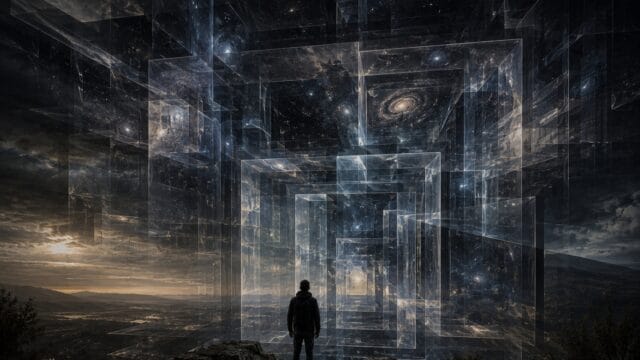
Some metaphysical traditions teach that reality contains dimensions or planes that cannot ordinarily be detected by the human senses. These may be described as spiritual realms, energetic planes, alternate realities, or higher levels of consciousness.
Human beings may be viewed as multidimensional entities whose existence extends beyond the physical body. Dreams, visions, meditation, near-death experiences, and altered states of awareness are sometimes interpreted as temporary encounters with these other levels of existence.
The existence of spiritual dimensions has not been scientifically demonstrated. Such dimensions belong primarily to religious, mystical, philosophical, and personal systems of interpretation.
The Soul and Spiritual Evolution
The soul is commonly viewed as an enduring part of the individual that may survive physical death. Earthly life may be understood as one stage within a longer process of learning and spiritual development.
Many metaphysical traditions accept reincarnation, although it is not a universal belief. In reincarnation-based systems, the soul experiences multiple lives to acquire wisdom, resolve karmic patterns, and advance toward a higher state of awareness.
Spiritual evolution is often described as the gradual development of compassion, wisdom, self-knowledge, and unity with divine consciousness.
Universal Interconnection
A central metaphysical belief is that all beings are connected. This idea may be expressed through concepts such as collective consciousness, universal energy, sacred unity, or the oneness of existence.
Thoughts and actions may therefore be believed to influence both the individual and the surrounding world. Compassion, personal responsibility, and respect for life are commonly treated as important elements of spiritual development.
Vibration and Spiritual Energy
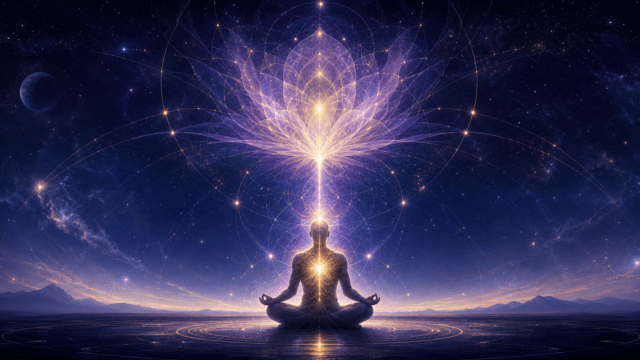
Many practitioners believe that people and other living beings possess subtle forms of energy. Terms such as aura, chakra, vibration, life force, and energy field are used to describe relationships among physical, emotional, and spiritual well-being.
Practices associated with spiritual energy include Reiki, crystal healing, sound therapy, energy balancing, breathwork, and chakra meditation.
Scientific support differs considerably among complementary practices. The United States National Center for Complementary and Integrative Health states that Reiki has not been clearly shown to be effective for health-related purposes and that there is no scientific evidence supporting the energy field said to be involved in the practice.
Spiritual or complementary practices should not be used as replacements for qualified medical or mental health care.
Spiritual Practices
Metaphysical spirituality generally emphasizes personal experience rather than exclusive dependence on religious authority. Practitioners may be encouraged to examine beliefs through meditation, intuition, observation, and self-reflection.
Common practices include:
Meditation and contemplation
Prayer and affirmations
Creative visualization
Dream interpretation
Energy healing
Astrology and divination
Study of spiritual or esoteric texts
Past-life exploration
Ritual and ceremonial practices
Journaling and self-reflection
Attempts to communicate with spiritual guides
Attempts to contact nonphysical or extraterrestrial intelligences
The purposes of these practices vary. Some are intended to cultivate peace and self-awareness. Others seek healing, spiritual knowledge, expanded consciousness, or communication with realities believed to exist beyond the physical world.
Relationship to Extraterrestrial Beliefs
Metaphysical spirituality has influenced several modern interpretations of extraterrestrial life. Within these belief systems, extraterrestrial beings may be viewed as more than biological organisms traveling through space. They may also be described as spiritually advanced, interdimensional, or capable of communicating through consciousness.
Some believers propose that intelligent civilizations undergo spiritual evolution alongside technological development. According to this model, advanced civilizations may have overcome warfare, developed telepathic abilities, and gained access to dimensions or forms of travel unknown to humanity.
These spiritual interpretations differ from the scientific study of extraterrestrial life. NASA Astrobiology studies the origin, evolution, and possible distribution of life in the universe. NASA states that no life beyond Earth has been discovered and that there is currently no evidence that extraterrestrial life has visited Earth.
Contactees and Channeling
A contactee is a person who claims to have communicated with an extraterrestrial intelligence. While some accounts describe physical encounters, others involve telepathy, dreams, visions, automatic writing, or channeling.
Channeling is the claimed transmission of information from a consciousness other than the individual producing the message. The supposed source may be described as a spirit, ascended master, extraterrestrial being, collective intelligence, or interdimensional entity.
Alleged extraterrestrial messages often concern peace, environmental protection, spiritual awakening, nuclear danger, and humanity’s preparation for membership in a wider cosmic community.
These communications are based on personal testimony and have not been independently verified as messages from extraterrestrial beings.
Starseeds
The starseed belief proposes that some human beings possess souls originating on other planets, star systems, or dimensions. Starseeds are commonly believed to have incarnated on Earth to assist humanity during a period of spiritual change.
Starseed traditions frequently associate souls with the Pleiades, Sirius, Arcturus, Andromeda, Orion, or other cosmic locations. Different communities assign particular personalities, abilities, and spiritual purposes to each supposed origin.
Some individuals identify as starseeds after experiencing a powerful attraction to space, a feeling of not belonging on Earth, vivid dreams, unusual spiritual experiences, or a personal conviction that their soul came from another world.
Starseed claims are spiritual beliefs. They are not supported by evidence establishing that human souls originate in other star systems.
Ascension
Ascension is a proposed movement into a higher state of consciousness or existence. It may refer to an individual awakening, a collective transformation of humanity, or the movement of Earth into a higher spiritual condition.
Some teachings describe ascension as an increase in vibration. Others portray it as the expansion of awareness beyond fear, conflict, and material limitation.
Extraterrestrial or interdimensional beings may be portrayed as observers, teachers, or guides in the ascension process. Certain believers maintain that open contact will occur only after humanity reaches a sufficient level of spiritual and ethical development.
There is no scientific evidence that Earth or humanity is physically moving into a higher vibrational dimension.
Ancient and Cosmic Origins
Some metaphysical systems suggest that humanity has ancient spiritual or genetic connections to extraterrestrial civilizations. These beliefs sometimes overlap with ancient astronaut theories and modern interpretations of myths involving beings who descended from the sky.
Supporters may interpret gods, angels, celestial teachers, or culture heroes as memories of extraterrestrial visitors. Mainstream archaeology and history generally interpret these figures within their original religious, cultural, and symbolic settings.
Claims that extraterrestrial beings created or genetically altered humanity have not been established by archaeology, genetics, astronomy, or evolutionary biology.
Historical Influences
Modern metaphysical spirituality developed from a combination of older philosophical, religious, and esoteric traditions.
Important influences include:
Classical metaphysics
Hermeticism
Neoplatonism
Gnosticism
Western esotericism
Spiritualism
Theosophy
Transcendentalism
New Thought
Hindu and Buddhist philosophy
Occult and ceremonial traditions
The New Age movement
Humanistic and transpersonal psychology
Spiritualism became especially prominent during the nineteenth century. Its followers believed that the living could communicate with the spirits of the dead through mediums.
Theosophy combined elements of Western esotericism with selected concepts from Asian religions. It popularized teachings about reincarnation, hidden spiritual masters, unseen planes of reality, and the spiritual evolution of humanity. These ideas later influenced portions of the New Age movement and some extraterrestrial spiritual traditions.
During the twentieth century, UFO contactee movements combined older spiritual concepts with stories of technologically and morally advanced visitors from other planets. Some contactees presented extraterrestrial beings as cosmic teachers who wanted humanity to abandon warfare and develop a more spiritual civilization.
Relationship to Religion
Metaphysical spirituality may exist alongside traditional religion, but it often differs from institutional faith in its emphasis on individual interpretation and direct personal experience.
Some practitioners identify as Christian, Buddhist, Hindu, Pagan, or members of another religion while also maintaining metaphysical beliefs. Others describe themselves as spiritual but not religious.
A Pew Research Center study of spirituality in the United States found considerable overlap between religious and spiritual identity. The study also found that many Americans believe in souls, unseen spiritual forces, or spiritual energies in nature.
Traditional religious communities may reject practices such as astrology, divination, channeling, or reincarnation when they conflict with established teachings. At the same time, many religions contain mystical traditions involving visions, divine union, spiritual transformation, and realities beyond the material world.
Scientific and Philosophical Perspectives
Science evaluates claims through observation, measurement, experimentation, and repeatable evidence. Many metaphysical claims involve realities that cannot presently be measured or independently verified.
Psychology and neuroscience may interpret some spiritual experiences through meditation, memory, expectation, suggestion, sleep states, emotional needs, or the human tendency to recognize meaningful patterns.
A spiritual experience may still possess personal, emotional, or symbolic value even when its supernatural explanation cannot be confirmed. The meaning of an experience and the factual accuracy of its interpretation are separate questions.
Academic philosophy continues to examine consciousness, personal identity, free will, causation, time, possibility, and the relationship between mind and matter. These debates show that fundamental questions about reality remain open to serious investigation. They do not, by themselves, confirm specific claims about spiritual dimensions, energy fields, reincarnation, or extraterrestrial communication.
Criticism and Controversy
Critics argue that metaphysical spirituality can blur the distinction between personal belief and established evidence. This becomes especially concerning when spiritual claims are presented as scientifically proven facts.
Health claims require particular caution. Unverified spiritual practices should not replace medical diagnosis, medication, emergency care, psychotherapy, or other evidence-based treatments.
Commercial exploitation is another concern. Teachers or organizations may charge substantial amounts for healing, initiation, secret knowledge, or promised communication with higher beings. Claims of exclusive supernatural authority can create unhealthy financial, emotional, or social relationships.
Critics have also raised concerns about cultural appropriation. Practices taken from Indigenous, Asian, African, or other cultural traditions may be separated from their original histories, altered, and sold as generalized ancient wisdom.
Supporters argue that metaphysical spirituality can encourage curiosity, hope, compassion, environmental responsibility, and a stronger sense of connection with life. For many practitioners, its value lies in personal meaning and ethical transformation rather than in the creation of a fixed religious doctrine.
Cultural Significance
Metaphysical spirituality has influenced literature, film, television, music, wellness culture, environmental movements, UFO religions, and popular discussions of consciousness.
Its extraterrestrial forms transform the question of alien life into a spiritual question. They ask not only whether other beings exist, but also whether contact with them would change humanity’s understanding of consciousness, morality, religion, and the sacred.
Extraterrestrial beings may function as symbols of humanity’s hopes and fears about technology, evolution, ecological crisis, warfare, and the future. Whether interpreted literally, spiritually, psychologically, or culturally, these beliefs form an important part of modern extraterrestrial mythology.
See Also
Ancient astronaut theories
Ascension
Channeling
Consciousness
Contactees
Esotericism
Extraterrestrial religions
Mysticism
New Age movement
Reincarnation
Spiritualism
Starseeds
Theosophy
Unidentified anomalous phenomena
Sources and Further Reading
Stanford Encyclopedia of Philosophy: Metaphysics
NASA Astrobiology: About Astrobiology
Pew Research Center: Spirituality Among Americans
Pew Research Center: Measuring Spirituality
National Center for Complementary and Integrative Health: Reiki
National Center for Complementary and Integrative Health: Complementary, Alternative, or Integrative Health
Copyright © 2026 Mystera Headquarters. All rights reserved.