Grays
Article
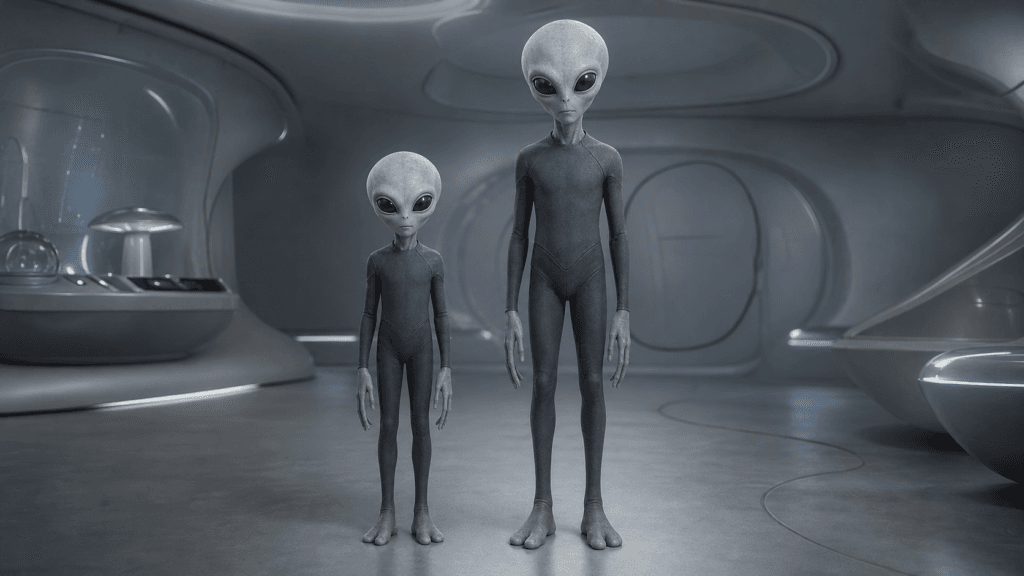
Artistic interpretation of two alleged Grays based on recurring descriptions in UFO reports, abduction narratives, and popular culture. Their appearance and physical differences are speculative and are not supported by verified biological evidence.
Encyclopedia Entry: 009Also known as: Greys, Gray aliens, Zeta Reticulans, Roswell GraysClassification: Alleged extraterrestrial or engineered non-human intelligenceReported origin: Zeta Reticuli and other locations, depending on the sourceEntity type: Small humanoidStatus: UnverifiedPrimary tradition: UFO encounters, alien-abduction narratives, and popular culture
Overview
Grays are among the most recognizable alleged extraterrestrial beings in modern culture. They are generally depicted as small, hairless humanoids with gray skin, enlarged heads, and large black eyes.
Reports involving Gray-like beings appear frequently in alien-abduction narratives. They are commonly described as conducting medical examinations, collecting biological material, communicating telepathically, and operating unidentified craft.
The now-familiar image developed gradually through UFO reports, books, films, television programs, illustrations, and repeated cultural exposure. No scientifically verified evidence confirms that Grays exist or that they have visited Earth.
Name and Terminology
Gray is the standard American English spelling, while Grey is common in British English. Both terms refer to the same general alleged entity type.
Other names include:
Zeta Reticulans
Roswell Grays
Small Grays
Large Grays
EBE, meaning Extraterrestrial Biological Entity
Biological androids
Workers or drones
These labels are not applied consistently. Some sources classify all Grays as one species, while others describe several unrelated groups with similar appearances.
Mystera Headquarters uses Grays as the primary encyclopedia name while recognizing Grey as an equally valid spelling.
Development of the Modern Tradition
Small humanoid beings appeared in science fiction before the modern UFO era, but their appearance varied widely. The standardized Gray image became prominent through a combination of reported encounters and popular entertainment.
The 1961 experience reported by Betty and Barney Hill became a foundational alien-abduction narrative. Under hypnosis, the couple described beings who subjected them to medical examinations aboard an unidentified craft. Later illustrations of the beings emphasized enlarged heads and unusual eyes, although the original descriptions did not match every feature of the modern Gray exactly.
The Hill story received widespread attention after John G. Fuller’s book The Interrupted Journey was published in 1966. The case helped establish many elements later associated with abduction reports, including missing time, forced examinations, telepathic influence, and fragmented memories.
Steven Spielberg’s 1977 film Close Encounters of the Third Kind introduced small, large-headed extraterrestrials to a massive audience. Whitley Strieber’s 1987 book Communion, featuring a striking alien face on its cover, further established the large black eyes and narrow lower face now associated with Grays.
By the 1990s, the Gray had become a dominant cultural symbol of extraterrestrial life.
Reported Appearance
Grays are generally described as humanoid but physically different from humans. Frequently reported characteristics include:
Gray, pale gray, beige, or blue-gray skin
A height ranging from approximately 3 to 5 feet
An enlarged, rounded, or pear-shaped head
Very large black or dark eyes
Small nostrils or an almost absent nose
A narrow mouth with thin or indistinct lips
No visible external ears
Little or no body hair
A slender neck and torso
Long, thin arms and legs
Three or four long fingers
Limited visible muscular development
The eyes are often depicted as completely black. Some accounts claim that the black surface is a protective covering over a more recognizable eye, but no physical evidence supports this interpretation.
Descriptions of clothing vary. Some witnesses report tight, seamless garments, while others describe the beings as apparently unclothed. Their bodies are usually portrayed without clearly visible reproductive anatomy.
Reported Types
UFO literature frequently divides Grays into several types.
Small Grays
Small Grays are generally described as 3 to 4 feet tall. They are often portrayed as workers who perform examinations, operate equipment, and follow instructions from taller beings.
Some sources describe them as biological androids or genetically engineered organisms rather than an independently evolved species.
Tall Grays
Tall Grays are typically described as 5 to 7 feet tall, with more developed facial features and greater authority. In abduction narratives, they are sometimes portrayed as supervisors directing the activities of smaller Grays.
Gray-Human Hybrids
Certain accounts describe beings with characteristics intermediate between humans and Grays. These alleged hybrids may have larger eyes, pale skin, fine hair, and more humanlike facial structures.
No biological evidence verifies any of these classifications.
Reported Origin
Zeta Reticuli is the location most frequently associated with Grays. It is a real binary star system approximately 39 light-years from Earth in the constellation Reticulum.
The association developed partly from a star map drawn by Betty Hill after her reported experience. Amateur astronomer Marjorie Fish later proposed that the pattern might represent nearby stars as viewed from Zeta Reticuli. Astronomers and skeptics have disputed this interpretation, noting that different viewing assumptions can produce many possible matches.
Other sources connect Grays with Orion, the Draco region, underground facilities, artificial habitats, or an unknown future version of humanity.
Astronomers have not confirmed an inhabited planet in the Zeta Reticuli system, and no verified transmission or physical object has established it as the origin of extraterrestrial visitors.
Reported Biology
Descriptions portray Grays as physically delicate beings with unusually large brains or sensory organs. Reported biological characteristics include:
Limited physical strength
Reduced digestive systems
Absorption of nutrients through the skin
Minimal emotional expression
Telepathic rather than spoken communication
Collective or networked consciousness
Sensitivity to bright light
Long life spans
Artificial reproduction or cloning
Some accounts claim that Grays are unable to reproduce naturally and require human genetic material to preserve their species. This idea became a major part of later abduction and hybridization narratives.
No Gray body, tissue sample, genome, medical image, or biological record has been independently authenticated.
Reported Behavior
Grays are most commonly associated with covert observation and alleged abduction experiences. Reports frequently describe them as calm, clinical, and emotionally distant.
Claimed behaviors include:
Removing people from bedrooms, vehicles, or isolated locations
Creating missing periods of time
Conducting medical examinations
Collecting blood, tissue, reproductive cells, or genetic material
Implanting small objects in the body
Communicating through telepathy
Influencing memory or perception
Showing witnesses images of environmental destruction
Returning individuals with incomplete memories
Not every account portrays Grays as hostile. Some witnesses describe them as neutral observers, spiritual teachers, healers, or beings carrying out a difficult program for reasons humans do not understand.
Other accounts portray them as deceptive, controlling, or indifferent to human suffering.
Alien-Abduction Narratives
Grays became closely associated with the modern alien-abduction narrative after the Hill case. Later investigators, including Budd Hopkins and David M. Jacobs, collected accounts involving missing time, medical procedures, reproductive themes, and alleged hybrid beings.
Many memories in these cases emerged during hypnosis. Memory researchers warn that hypnosis can increase confidence without guaranteeing accuracy. Suggestive questioning, cultural expectations, dreams, sleep paralysis, and repeated exposure to alien imagery may influence what a person remembers or reports.
This does not mean that individuals are necessarily inventing their experiences. People can experience genuine fear, physical sensations, vivid imagery, and lasting distress even when the cause remains uncertain.
Reported Reproductive Program
A recurring claim states that Grays collect human reproductive material to create hybrid offspring. Reported procedures include the removal of eggs or sperm, unexplained pregnancies, missing pregnancies, and later encounters with alleged hybrid children.
Supporters interpret similarities between accounts as evidence of a coordinated program. Critics note that these similarities may result from shared cultural imagery, influential books, suggestive investigative methods, and the circulation of established abduction narratives.
No independently verified hybrid individual, genetic sample, or medical record confirms a human-Gray reproductive program.
Reported Abilities and Technology
Accounts attribute numerous abilities and technologies to Grays, including:
Telepathic communication
Mental influence and memory suppression
Paralysis of human witnesses
Movement through solid objects
Manipulation of time or perception
Silent aerial craft
Advanced medical instruments
Artificial gravity
Biological engineering
Implant technology
Interstellar or interdimensional travel
Some reported abilities may reflect experiences associated with sleep paralysis, altered states of consciousness, dreams, anesthesia, trauma, or memory reconstruction.
No device attributed to Grays has been publicly verified as extraterrestrial technology.
Relationship to Ebens
Grays and Ebens share several reported physical characteristics, including small bodies, enlarged heads, and unusual eyes.
Some writers classify Ebens as a variety of Gray. Others describe them as a separate species from the planet Serpo, with different skin color, social behavior, and cultural traditions.
Mystera Headquarters maintains separate entries because the Eben narrative is specifically associated with Project Serpo, while Gray reports appear across a much broader range of UFO encounters, abduction accounts, books, and entertainment.
Relationship to Other Alleged Species
UFO literature sometimes portrays Grays as working with other alleged extraterrestrial groups. Reported associations include:
Reptilians or Draconians
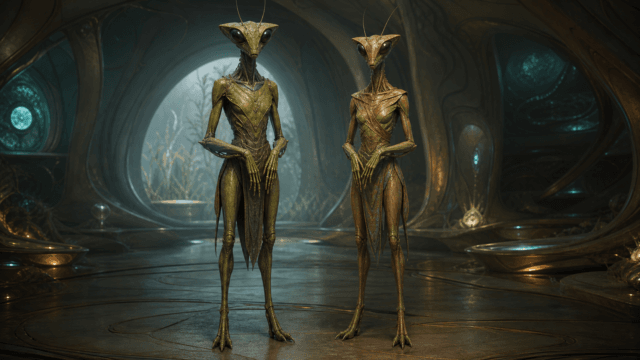
Mantid beings
Nordics
Ebens
Human-looking military personnel
Gray-human hybrids
Some narratives describe Grays as subordinate workers. Others portray them as independent scientists, biological machines, or members of alliances.
These relationships vary greatly between sources and have not been independently verified.
Cultural Influence
The Gray has become an international symbol of extraterrestrial life. Its image appears in:
Films and television programs
Books and comic art
Advertising
Toys and costumes
Video games
Internet memes
UFO tourism
Spiritual and conspiracy communities
Repeated exposure to this image may influence how unusual experiences are remembered and interpreted. At the same time, believers argue that the consistency of the image reflects repeated encounters with a real type of being.
The direction of influence remains debated within UFO studies and folklore research.
Psychological and Medical Interpretations
Researchers have proposed several possible explanations for Gray encounters and abduction experiences.
These include:
Sleep paralysis
Hypnagogic or hypnopompic hallucinations
Vivid dreams
False-memory formation
Suggestion during hypnosis
Trauma-related experiences
Temporal-lobe activity
Cultural expectations
Misidentified medical experiences
Deliberate fabrication in some cases
Sleep paralysis can involve an inability to move, a sensed presence, pressure on the body, intense fear, and vivid figures in the room. These features overlap with certain bedroom-abduction reports.
No single explanation necessarily accounts for every reported experience.
Evidence and Interpretation
No publicly verified body, spacecraft, genetic sample, implant, photograph, or communication confirms the existence of Grays.
Evidence presented in support of the tradition generally consists of:
Witness testimony
Memories recovered through hypnosis
Drawings and reconstructed images
Unexplained marks or medical symptoms
Alleged implants
Photographs and videos of disputed authenticity
Similarities among separate reports
These materials have not provided reproducible scientific confirmation of extraterrestrial visitation.
Supporters may interpret the consistency of reports as evidence that Grays are real. Researchers may interpret the same pattern as the development of a powerful modern archetype shaped by folklore, psychology, media, and shared cultural expectations.
Mystera Headquarters Classification
Mystera Headquarters classifies Grays as an unverified alleged humanoid extraterrestrial or engineered intelligence appearing primarily in UFO encounters, alien-abduction narratives, and popular culture.
Small Grays, Tall Grays, and alleged Gray-human hybrids are treated as reported subtypes within the broader classification.
Editorial Notice
This encyclopedia entry documents claims, beliefs, reported experiences, and cultural traditions concerning alleged non-human intelligences. Inclusion does not constitute proof that the beings or events described are real.
Descriptions of Gray appearance, biology, origin, behavior, abilities, technology, and interactions with humans are attributed to their respective sources and should not be interpreted as established scientific facts.
Sources and Further Reading
University of New Hampshire, Betty and Barney Hill Papers
Library of Congress, “Teaching Scientific Literacy: The Case of the Alien Abduction”
Library of Congress, Betty and Barney Hill photographic collection
Matthew Bowman, The Abduction of Betty and Barney Hill
Kimberly Ball, “UFO-Abduction Narratives and the Technology of Tradition”
Cambridge University Press, “On the Plurality of Inhabited Worlds”
Boston Public Library, “The Abduction of Betty and Barney Hill”
Benjamin E. Zeller, “At the Nexus of Science and Religion: UFO Religions”
Encyclopedia of Extraterrestrial and Non-Human Intelligences, Entry 009
Published by Mystera Headquarters
© 2026 Mystera Headquarters. All rights reserved.