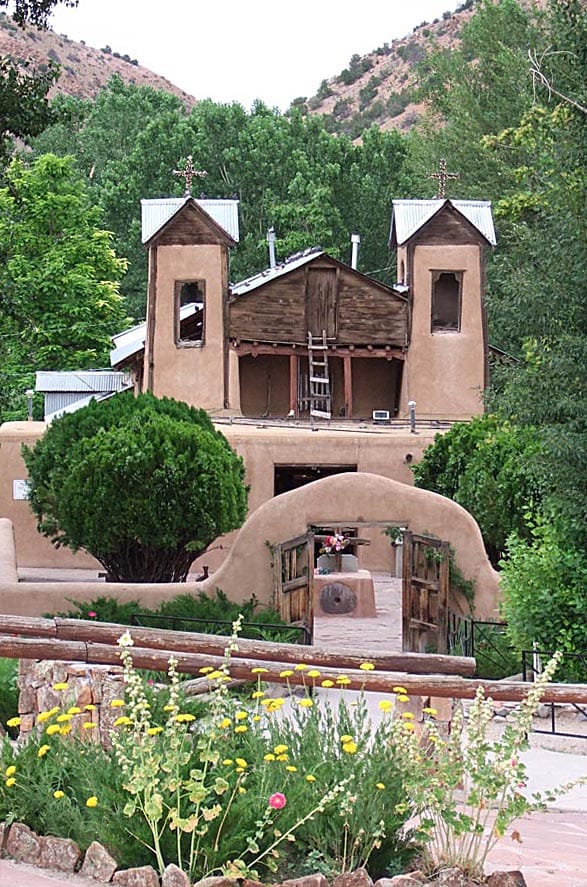
El Santuario de Chimayó
Section
Listing Name: El Santuario de Chimayó
Alternative Names: Santuario de Nuestro Señor de Esquipulas, Shrine of Our Lord of Esquipulas, Lourdes of America
Category: Sacred Historic Church, Catholic Shrine, Healing Site, Pilgrimage Destination, National Historic Landmark
Faith or Spiritual Tradition: Roman Catholic Christianity, with an earlier Indigenous history associated with the sacred landscape and healing
Mystery Level: High Sacred Mystery
Country: United States
State: New Mexico
City: Chimayó
Address:
15 Santuario Drive
Chimayó, NM 87522
United States
Latitude: 35.989500
Longitude: -105.931500
Short Description
El Santuario de Chimayó is a historic adobe church and one of the most important Catholic pilgrimage destinations in the United States.
The shrine is famous for el pocito, a small pit containing earth that many pilgrims associate with spiritual, emotional, and physical healing.
Religious traditions surrounding the site include the discovery of a crucifix beneath a mysterious light, the crucifix’s unexplained return to Chimayó after it was carried away, and generations of reported healings.
The property remains an active place of worship and pilgrimage.
Sacred Significance
People have traveled to the Chimayó area for healing and prayer for generations.
The National Park Service reports that Pueblo and Tewa people regarded the area as sacred and associated it with healing before Spanish occupation.
In the Catholic tradition, El Santuario is dedicated to Our Lord of Esquipulas. Pilgrims visit the shrine to pray for healing, request help for loved ones, give thanks for answered prayers, attend Mass, and collect a small amount of earth known as tierra bendita, or holy dirt.
The shrine is sometimes called the “Lourdes of America” because of its reputation as a place of pilgrimage and healing.
The official shrine describes itself as a place where illness, suffering, loss, faith, and pilgrimage can lead to a deeper spiritual encounter.
History
The sacred history of the Chimayó landscape began before the construction of the present church.
Indigenous communities lived in the region for centuries before Spanish settlement. The Tewa name associated with Chimayó is connected to one of the sacred hills above the valley.
Catholic devotion at the site became associated with Our Lord of Esquipulas, an image of the crucified Christ originating in Guatemala. Devotion to this figure spread north through Mexico and eventually reached New Mexico.
According to the best known tradition, Bernardo Abeyta saw a mysterious light shining from the ground on Good Friday in 1810.
When he dug at the location, he reportedly discovered a crucifix identified with Our Lord of Esquipulas.
The crucifix was taken to a nearby church, but the following morning it was reportedly missing and was found again at the original location in Chimayó.
Tradition holds that this happened three times. The repeated return was interpreted as a sign that the crucifix was meant to remain at Chimayó.
In 1813, Abeyta requested permission to construct a chapel at the location. The present adobe shrine was completed around 1816.
The property remained with Abeyta’s descendants until 1929. It was then purchased by preservationists and donated to the Archdiocese of Santa Fe.
El Santuario de Chimayó is now recognized as a National Historic Landmark.
The Holy Dirt
Inside the shrine is a small room containing el pocito, or “little well.” The pit holds earth regarded by many pilgrims as a sacred reminder of faith, prayer, and healing.
Visitors traditionally kneel beside the pocito and take a small amount of dirt. Some pilgrims rub the earth on an injured or painful area of the body. Others carry it home to relatives or friends who are unable to make the pilgrimage.
The nearby room contains photographs, crutches, written testimonies, and other objects left by people expressing gratitude or asking for healing.
The dirt does not naturally regenerate. According to the shrine’s official website, so much earth had been removed by the 1960s that the floor began to sink.
Flagstone was installed to stabilize the area, and the pocito has since been replenished with dirt collected from the surrounding hills.
Reports involving the holy dirt are matters of faith and personal testimony rather than scientifically verified medical evidence.
The dirt should never be used as a replacement for professional medical care. Consuming soil may present health risks and is not recommended as a medical treatment.
Legends, Miracles, and Unusual Experiences
The most famous legend concerns the light seen by Bernardo Abeyta and his discovery of the crucifix.
Its reported return to the same location after being removed three times forms the central miracle tradition associated with the shrine’s founding.
Another version of the story says that Abeyta received a vision while plowing and was directed to dig at a location containing earth with healing powers.
Over the generations, pilgrims have attributed recoveries, emotional transformations, answered prayers, and other unusual experiences to their visits.
Photographs, discarded crutches, written messages, and devotional objects left at the shrine represent personal expressions of faith and gratitude.
Although meaningful to pilgrims, these objects do not constitute scientific proof of miraculous healing.
Many visitors report experiencing intense peace, emotional release, spiritual comfort, or a strong sense of presence at the site.
These experiences are personal and may be interpreted differently according to each visitor’s beliefs.
Reported Spiritual and Paranormal Experiences
El Santuario de Chimayó is best known as a sacred healing site rather than a haunted location.
Its unusual reputation centers on prayer, pilgrimage, healing traditions, religious miracles, and personal spiritual experiences.
Some visitors describe a powerful presence, unexpected emotional reactions, unusual peacefulness, or unexplained sensations inside the shrine.
There is no well documented history of threatening apparitions, hostile entities, or dangerous supernatural disturbances.
Environmental conditions, religious expectation, personal faith, architecture, acoustics, and strong emotions may influence visitor experiences.
A respectful investigation may examine the property’s history, architecture, environmental conditions, religious traditions, healing testimonies, and publicly reported experiences.
Formal paranormal or spiritual investigations require advance permission from shrine authorities. Investigators must not interfere with prayer, Mass, healing practices, ceremonies, staff, or private religious experiences.
Why This Place Is Unique
El Santuario de Chimayó combines a long sacred history, an active pilgrimage tradition, a mysterious founding legend, reported healings, and a physical feature that visitors can still encounter.
The shrine’s history contains several distinct cultural layers. Indigenous traditions associated the surrounding landscape with healing before the Catholic shrine was constructed.
Later Catholic traditions connected the location with Our Lord of Esquipulas, the mysterious crucifix, and the holy dirt.
The pocito remains part of a living religious practice. Pilgrims continue to kneel beside it, pray for healing, and take small amounts of earth to loved ones.
The shrine is unusual because its mystery is not confined to the past. Prayer, pilgrimage, testimony, and healing traditions continue at the property today.
Investigation Guidelines
Historical, spiritual, environmental, and paranormal research must follow the shrine’s rules and receive any required permission.
An ordinary visit does not authorize a formal investigation, specialized equipment, restricted access, after hours entry, or organized recording.
Investigators should contact shrine authorities before conducting an organized investigation or bringing specialized equipment.
Any investigation must remain quiet, noninvasive, and secondary to the religious purpose of the property.
Mass, prayer, confession, healing practices, pilgrimages, ceremonies, and private religious experiences must not be interrupted, observed closely, photographed, or recorded without clear permission.
Investigators must not touch or move crutches, photographs, written prayers, memorials, sacred art, offerings, or other devotional objects.
Spirit provocation, unauthorized séances, imitation of Catholic or Indigenous ceremonies, fires, candles, incense, and attempts to summon entities are not appropriate without explicit authorization.
Investigators must obey all photography restrictions. Recording devices must not be concealed or used in areas where photography and filming are prohibited.
Reports should clearly distinguish between historical evidence, religious tradition, personal testimony, environmental observations, and unverified paranormal interpretations.
Visitor Information
El Santuario de Chimayó is an active religious site containing historic chapels, devotional areas, a welcome center, and visitor facilities.
The Chapel of Our Lord of Esquipulas and the Holy Child of Atocha Chapel are normally open daily from 9:00 a.m. until 5:00 p.m.
Seasonal schedules, religious services, holidays, weather, and special events may affect access. Visitors should check the official website before traveling.
The shrine receives particularly large numbers of pilgrims during Holy Week and around Good Friday. Roads, parking areas, and visitor facilities may become crowded during major pilgrimages.
Donations are strongly encouraged to support preservation and maintenance of the historic property.
Private access, after hours visits, formal investigations, and specialized tours should never be assumed to be available. Direct authorization from shrine authorities is required.
Respect and Cultural Restrictions
El Santuario de Chimayó is an active Catholic shrine rather than an abandoned historical attraction.
Visitors may encounter people attending Mass, praying for seriously ill loved ones, grieving, or giving thanks for deeply personal experiences.
Visitors should speak quietly, dress respectfully, avoid interrupting worship, and follow all instructions from shrine staff.
Sacred objects, devotional offerings, photographs, crutches, written prayers, and memorials must not be touched, moved, photographed closely, or removed.
Only a modest amount of holy dirt should be taken, and visitors should follow the shrine’s current instructions.
The dirt should never be sold, exploited, or advertised as a scientifically proven cure.
Organized investigations, séances, spirit communication, filming, and ceremonies require advance authorization.
Any approved investigation must respect worshippers, sacred objects, photography restrictions, and the shrine’s active religious purpose.
The Chimayó landscape held spiritual and cultural importance for Indigenous communities before the Catholic shrine was constructed. Its Indigenous and Catholic histories are distinct parts of the location’s complex sacred heritage.
Photography Restrictions
Photography and filming are strictly prohibited inside the Chapel of Our Lord of Esquipulas, the Holy Child of Atocha Chapel, the Native American Chapel, the museum, and the welcome center.
The prohibition also applies to amateur photography intended only for personal use.
Professional, academic, religious, and commercial photography requires advance permission from the Archdiocese of Santa Fe’s Office of Historic Artistic Patrimony and Archives.
The shrine advises allowing at least one month for a permission request to be processed.
Visitors should follow all posted rules concerning exterior photography and should never photograph worshippers, ceremonies, prayer objects, or private religious activities without permission.
Accessibility
Because this is a historic religious property, accessibility may differ between buildings and areas of the grounds.
Visitors with mobility, vision, hearing, or other accessibility needs should contact the shrine before traveling to confirm current accommodations.
Reaching into el pocito traditionally requires kneeling. Visitors who cannot kneel should ask shrine staff whether assistance or another arrangement is available.
Official Website
El Santuario de Chimayó Official Website
Mystera Classification
Sacred: Yes
Active Place of Worship: Yes
Historically Unique: Yes
Associated With Healing: Yes, according to religious tradition and personal testimony
Associated With a Miracle: Yes, according to religious tradition
Haunted: Not established
Reported Spiritual Experiences: Yes
Reported Paranormal Experiences: Anecdotal and unverified
Paranormal or Spiritual Investigation: Formal investigations require advance permission from shrine authorities. Historical and spiritual research conducted during an ordinary visit must not interfere with prayer, Mass, healing practices, or private religious experiences.
Publicly Accessible: Yes, subject to religious services, operating hours, photography rules, and site restrictions
Sources and Image Credit
El Santuario de Chimayó Official Website
Official Information About the Holy Dirt
Official Photography and Filming Restrictions
National Park Service: El Santuario de Chimayó
Photograph: “Santuario Chimayo” by Andrea Stawitcke. Licensed under Creative Commons Attribution 2.5. View and download the original photograph and license information.
© 2026 Mystera Headquarters. All rights reserved.