Medicine Wheel and Medicine Mountain National Historic Landmark
Section
Listing Name: Medicine Wheel and Medicine Mountain National Historic Landmark
Alternative Name: Bighorn Medicine Wheel
Category: Indigenous Sacred Site, Ceremonial Landscape, Archaeological Site, National Historic Landmark
Country: United States
State: Wyoming
Nearest City: Lovell
Access Location:
Bighorn National Forest
Forest Service Road 12
Approximately 32 miles east of Lovell, Wyoming
United States
Latitude: 44.82642
Longitude: -107.92170
Short Description
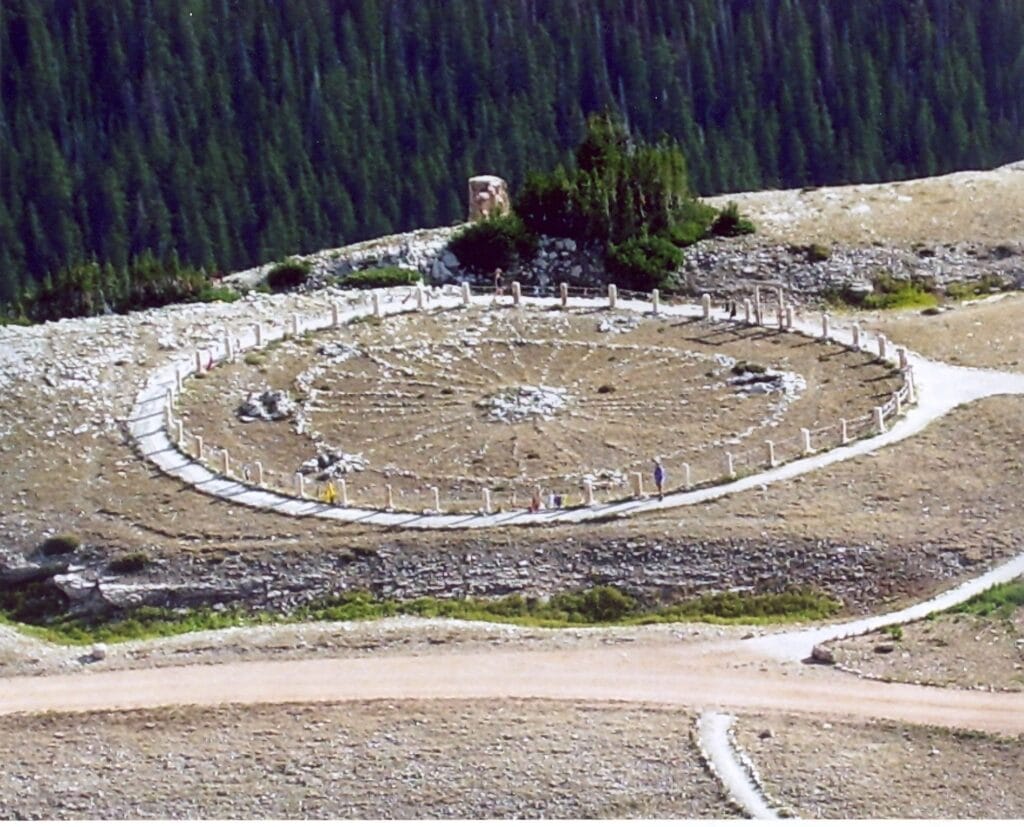
The Medicine Wheel and Medicine Mountain National Historic Landmark is an ancient Indigenous ceremonial landscape high in the Bighorn Mountains of Wyoming. Its best known feature is a large stone wheel formed from local limestone, with 28 spokes extending from a central cairn toward an outer circle.
The Medicine Wheel remains a living sacred place where Indigenous people continue to pray, conduct ceremonies, leave offerings, and maintain cultural connections with the mountain. Its precise age, original builders, and complete meaning are not known to the public.
Sacred Significance
Medicine Mountain has spiritual importance to numerous Indigenous nations of the northern Plains and surrounding regions. Cultural associations include the Apsáalooke, also known as the Crow, as well as the Arapaho, Blackfeet, Cheyenne, Shoshone, Lakota, and other Native peoples.
The site is not simply an archaeological structure from the distant past. It remains part of living Indigenous traditions. Prayer ties, cloth, tobacco, feathers, and other offerings may be present around the wheel.
The meanings of the Medicine Wheel vary among different nations and individuals. Some knowledge associated with the site is private and is not intended to be explained to visitors. Mystera recognizes that the absence of a public explanation does not make the site an unsolved puzzle for outsiders to interpret.
History and Age
Indigenous people have occupied and traveled through the Bighorn region for thousands of years. Archaeological remains, ancient trails, traditional use areas, and oral histories demonstrate that Medicine Mountain belongs to a much larger cultural landscape.
The present stone wheel is believed to be at least several centuries old, although portions of the surrounding ceremonial landscape may reflect a much longer history of human presence and spiritual use. The wheel may also have been repaired, changed, or renewed by different generations.
The site was added to the National Register of Historic Places in 1969 and designated a National Historic Landmark in 1970. In 2011, the protected landmark area was greatly expanded to include more of Medicine Mountain, ancient trails, ceremonial areas, and other culturally important features.
This expanded protection reflects the understanding that the stone wheel cannot be separated from the mountain and surrounding landscape.
Structure and Design
The Medicine Wheel is constructed from local white limestone. It measures approximately 80 feet across and contains a central stone cairn, an outer circular rim, 28 stone spokes, and six smaller stone enclosures around its perimeter.
The exact purpose of every feature is not publicly known. The wheel may have served ceremonial, spiritual, educational, calendrical, or observational purposes at different times.
Visitors must never move stones, enter protected areas without permission, climb on cairns, or attempt to repair or recreate any part of the structure.
Possible Astronomical Alignments
Researchers have proposed that some cairns and stone alignments may correspond with the rising or setting of the Sun near the summer solstice. Other proposed alignments have been associated with prominent stars.
These interpretations have encouraged the description of the Medicine Wheel as an astronomical observatory or calendar. However, not every proposed alignment is universally accepted, and astronomical theories do not provide a complete explanation of the site.
Scientific observations should not be used to dismiss Indigenous spiritual knowledge. For many Indigenous traditions, relationships among the land, sky, seasons, ceremony, community, and spiritual life are interconnected.
Offerings and Continuing Ceremonies
Prayer offerings may be tied to the fence or placed near the wheel. These objects must not be touched, moved, photographed closely, collected, or treated as abandoned material.
The site may temporarily close when Indigenous ceremonies are taking place. Visitors must follow all instructions from Forest Service personnel, interpreters, and ceremonial participants.
No visitor is entitled to observe, record, or question people participating in a private ceremony.
Legends and Traditional Knowledge
Different Indigenous nations maintain their own histories and teachings concerning Medicine Mountain. Some traditions connect the mountain with fasting, prayer, healing, vision seeking, protection, and communication with the spiritual world.
Certain stories and teachings are shared publicly, while others remain within families, ceremonial societies, or tribal communities. Mystera does not combine separate tribal traditions into a single generalized legend.
Visitors should be cautious of modern accounts that claim to reveal one secret meaning for the Medicine Wheel. No single outside interpretation can represent every nation connected with the site.
Unusual Experiences
Some visitors describe an intense sense of stillness, emotional clarity, heightened awareness, or spiritual presence on Medicine Mountain. Others report that the wind, open sky, distant views, and isolation create an unusually powerful atmosphere.
Experiences involving meaningful dreams, unexpected emotions, sensations of being watched, unusual animal encounters, or a strong feeling of connection have also appeared in personal accounts of sacred landscapes such as this one.
These experiences are personal and cannot be scientifically verified. They should not be presented as proof of supernatural activity or used to override Indigenous understandings of the site.
Reported Paranormal Activity
The Medicine Wheel does not have a well established haunted reputation. Stories about ghosts, curses, portals, or mysterious energy are usually modern interpretations rather than documented Indigenous teachings.
Unusual sensations can also be influenced by altitude, rapidly changing weather, strong wind, physical exertion, isolation, and personal expectations.
Mystera classifies the location as a living Indigenous sacred and ceremonial landscape, not as a haunted attraction.
Why This Place Is Unique
The Medicine Wheel combines an ancient stone structure, a dramatic mountain setting, possible celestial relationships, archaeological importance, and continuing Indigenous ceremonial use.
Its greatest importance is not that its complete meaning remains unknown to the public. Its importance comes from the enduring relationships Indigenous nations maintain with Medicine Mountain and the wider cultural landscape.
The site also influenced important changes in how federal land managers consult with tribal nations and protect traditional cultural places.
Investigation Guidelines
Respectful historical, environmental, photographic, spiritual, or anomalous research may be conducted only within areas legally open to the public and during ordinary visitor access.
All research must remain quiet, noninvasive, and secondary to prayer, ceremony, cultural privacy, and preservation. Investigators must not touch offerings, move stones, imitate Indigenous ceremonies, use provoking language, conduct séances, leave ritual objects, play amplified recordings, or attempt spirit communication at the wheel.
Electronic equipment must not interfere with visitors or ceremonies. Researchers should recognize that wind, altitude, weather, wildlife, radio signals, and changing temperatures can affect instruments and personal perceptions.
Organized investigations, commercial filming, specialized equipment, after hours access, entry into restricted areas, or research involving tribal cultural knowledge require advance permission from the appropriate Forest Service office and, when applicable, consultation with associated tribal representatives.
Visitor Information
Access is generally seasonal because Medicine Mountain receives heavy snow and severe winter weather. The road commonly opens from approximately mid June through September, but exact dates depend on conditions.
From United States Highway 14A, visitors travel approximately three miles along Forest Service Road 12 to the parking area. Most visitors must then walk approximately 1.5 miles along a gravel road to reach the Medicine Wheel.
There is normally no admission fee. Hours, road conditions, closures, and access rules can change. The site may close temporarily for Indigenous ceremonies.
Visitors should contact Bighorn National Forest before traveling.
Respect and Cultural Restrictions
Walk around the Medicine Wheel in a clockwise direction when requested by posted guidance or site personnel.
Remain on designated paths and protect the fragile high elevation vegetation.
Do not touch prayer ties, cloth, feathers, tobacco, bundles, stones, cairns, or other offerings.
Do not remove natural or cultural materials.
Do not enter an active ceremony or attempt to watch from a distance after being asked to leave.
Do not imitate ceremonial practices or present personal interpretations as authentic Indigenous teachings.
Keep voices low and allow others to pray without interruption.
Pets must remain under control and should be kept away from offerings and ceremonial activity.
Photography Restrictions
General landscape photography is normally permitted during public access. Photography and filming must stop when ceremonies are taking place or when requested by site personnel or ceremonial participants.
Do not photograph people engaged in prayer without their clear permission. Avoid close photographs of offerings, prayer ties, ceremonial objects, or private activities.
Commercial photography, professional productions, drones, and organized filming may require permits or separate authorization.
Accessibility
The route from the parking area to the Medicine Wheel is approximately 1.5 miles each way along a gravel road at an elevation of more than 9,600 feet.
Visitors should prepare for strong wind, intense sunlight, cold temperatures, thunderstorms, and rapidly changing weather. The high elevation can make physical activity more difficult.
Motorized access accommodations may be available for visitors with disabilities. Contact the Forest Service before visiting to confirm current procedures and assistance.
Official Website
Mystera Classification
Living Indigenous Sacred and Ceremonial Landscape
Respectful observation and lawful, noninvasive research may occur during normal public access. Organized investigations, specialized equipment, commercial activity, after hours access, restricted area entry, ceremonial observation, or research involving tribal cultural knowledge require formal permission and appropriate cultural consultation.
This site must not be presented as an abandoned ruin, paranormal attraction, or open location for unauthorized ritual activity.
Sources and Image Credit
National Park Service: National Historic Landmark Record
National Park Service: The Medicine Wheel
WyoHistory.org: Medicine Wheel Visitor Information
WyoHistory.org: Medicine Wheel and Medicine Mountain
Image Source: Wikimedia Commons: MedicineWheel.jpg
Image Credit: United States Forest Service
License: Public domain in the United States because the photograph is a work of the United States federal government.
© 2026 Mystera Headquarters. All rights reserved.