Devils Tower National Monument
Section
Listing Name: Devils Tower National Monument
Alternative Names: Bear Lodge, Bear’s Lodge, Bear’s House, Bear’s Tipi, Grizzly Bear’s Lodge
Category: Sacred Indigenous Landscape, Geological Formation, National Monument, Cultural Site, Modern Mystery Landmark
Cultural Traditions: Arapaho, Cheyenne, Crow, Kiowa, Lakota, Shoshone, and other Northern Plains tribes
Mystery Level: High Sacred Mystery
Country: United States
State: Wyoming
County: Crook County
Nearest Community: Devils Tower
Physical Address:
149 State Highway 110
Devils Tower, WY 82714
United States
Latitude: 44.589986
Longitude: -104.696633
Short Description
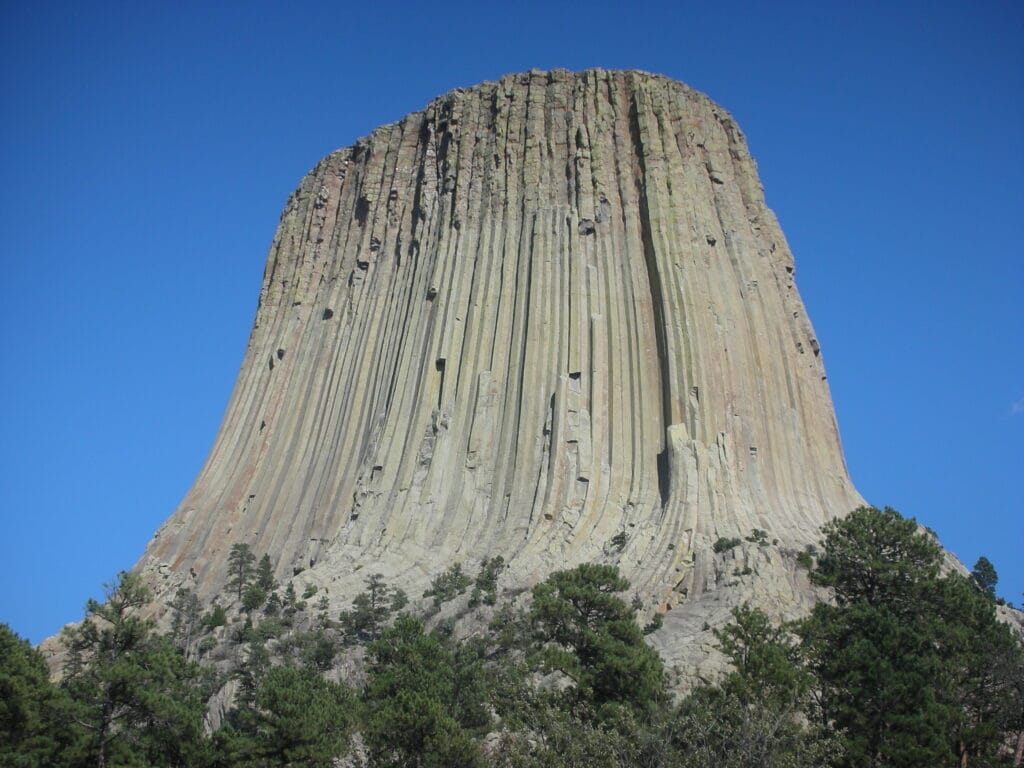
Devils Tower is a massive formation of vertical stone columns rising 1,267 feet above the Belle Fourche River in northeastern Wyoming. It is the world’s largest known example of columnar jointing and was designated the first national monument in the United States in 1906.
The Tower is sacred to more than 20 Native American tribes. Many traditional names for the formation refer to a bear, including Bear Lodge, Bear’s House, and Bear’s Tipi. Indigenous oral histories describe the Tower’s creation, its relationship with bears, and its continuing spiritual importance.
The formation is also surrounded by geological questions, reports of unusual sensations, and modern stories involving unidentified lights and aerial phenomena. Its appearance in the film “Close Encounters of the Third Kind” strengthened its international association with UFO culture, although that connection comes from popular entertainment rather than Indigenous tradition.
Sacred Significance
The Tower has held spiritual and cultural importance for Indigenous peoples for generations. It remains a place of prayer, ceremony, fasting, vision seeking, and the placement of sacred prayer bundles.
The Arapaho, Cheyenne, Crow, Kiowa, Lakota, Shoshone, and other tribes maintain distinct relationships with the Tower. Their traditions should not be combined into a single universal explanation.
Many Native American names for the formation are connected with bears. These names reflect respect for the Tower and its place within tribal histories and sacred narratives.
The official name “Devils Tower” remains controversial. Evidence suggests that the name may have resulted from a nineteenth century mistranslation of an Indigenous name. Tribal organizations have supported restoring a name associated with Bear Lodge.
Visitors may see prayer cloths or bundles attached to trees near trails. These are sacred religious objects and must not be touched, photographed closely, removed, or disturbed.
Indigenous Creation Traditions
Several Indigenous traditions describe the Tower as being formed through an encounter involving people, bears, and supernatural protection.
In one Kiowa tradition, seven girls were pursued by bears. The ground rose beneath the girls and carried them beyond the bears’ reach. The bears clawed the sides of the rising rock, creating the long vertical marks visible today. The girls were lifted into the sky and became stars.
A Cheyenne tradition describes seven brothers who rescued the oldest brother’s wife from a giant bear. Other traditions involve children, families, or warriors escaping bears as the earth or a sacred rock rose beneath them.
An Arapaho tradition describes a girl who became a bear and attacked members of her family, leaving marks on a great rock.
These accounts are sacred narratives belonging to specific cultures. Differences between them should be preserved rather than blended into one story.
Geological History
Devils Tower is composed of phonolite porphyry, an uncommon type of igneous rock.
Molten rock pushed upward beneath layers of sedimentary rock millions of years ago. It cooled underground and contracted, producing the striking columns visible today.
Scientists continue to debate the exact geological process that created the original underground structure. Proposed explanations include a volcanic plug, a shallow intrusion, or another type of igneous formation.
Over millions of years, erosion removed the softer surrounding rock and exposed the more resistant Tower.
The vertical grooves resemble enormous claw marks. Geology explains them as spaces between rock columns, while Indigenous traditions connect them with bears. These understandings come from different systems of knowledge and can be presented together without treating them as interchangeable.
Large fallen columns surround the base. Smaller pieces fall periodically, but no person has witnessed an entire massive column breaking away during recorded history.
The Mystery of Its Formation
Geologists agree that the Tower formed from cooled magma and was later exposed through erosion. However, they do not completely agree about the shape or type of the original underground body.
No volcanic crater has been identified at the site. The surrounding geological evidence does not provide a complete picture of how the molten material was positioned before erosion exposed it.
The formation’s unusual size and remarkably regular columns make it exceptional even among other examples of columnar jointing.
The continuing scientific debate concerns the details of its formation, not whether natural geological processes created it.
Legends and Unusual Experiences
Visitors often describe a powerful sense of presence, deep silence, emotional intensity, or heightened awareness near the Tower.
Some people report vivid dreams, unusual coincidences, changes in mood, or a feeling that the formation is watching over the surrounding landscape. These experiences are personal and have not been scientifically verified.
Anecdotal stories also describe unexplained lights around the Tower or unusual objects in the sky. The remote landscape, clear night sky, aircraft, satellites, weather, and astronomical objects can contribute to unusual observations.
Claims involving energy fields, portals, or extraterrestrial activity are not supported by established scientific evidence.
The Tower’s genuine sacred history must remain separate from entertainment based UFO mythology.
Connection to UFO Culture
Devils Tower became internationally associated with extraterrestrial contact after appearing prominently in Steven Spielberg’s 1977 film “Close Encounters of the Third Kind.”
In the film, characters experience visions of the Tower and travel there before a major encounter with extraterrestrial visitors. This fictional story transformed the monument into a symbol of UFO culture.
Visitors sometimes arrive because of the film, and some conduct skywatching activities in the surrounding region. The movie connection is an important part of the Tower’s modern popular history, but it should not be confused with Indigenous sacred traditions or evidence of actual extraterrestrial activity.
Reported Paranormal Activity
Devils Tower is not known primarily as a haunted location. Its mysterious reputation centers on its sacred significance, unusual geology, powerful atmosphere, Indigenous traditions, and modern UFO associations.
Some visitors report unexplained lights, feelings of being watched, sudden emotional changes, strange dreams, or electronic equipment behaving unpredictably. These reports are anecdotal and have not been established as reliable evidence of paranormal activity.
Natural explanations may include weather, wildlife, aircraft, satellites, reflections, magnetic interference from ordinary sources, expectation, or the psychological effect of the Tower’s size and isolation.
A respectful investigation may examine environmental conditions, geology, astronomy, history, personal experiences, and publicly available cultural information.
Any organized paranormal or spiritual investigation must comply with National Park Service rules and respect Indigenous ceremonies, prayer objects, restricted areas, and cultural privacy.
Why This Place Is Unique
Devils Tower brings together a rare geological formation, living Indigenous traditions, modern climbing history, national conservation history, and worldwide popular culture.
Its long vertical columns resemble the claw marks described in several Indigenous sacred narratives. This visual connection gives the landscape unusual symbolic power.
The Tower is also important because its meaning remains active. Ceremonies and prayers continue, tribal communities maintain strong relationships with the site, climbers travel from around the world, geologists continue studying its formation, and visitors arrive because of both sacred history and modern mysteries.
Few American locations occupy such a prominent place in Indigenous tradition, geological study, outdoor recreation, and UFO popular culture at the same time.
Investigation Guidelines
Respectful investigations may focus on the Tower’s geology, cultural history, oral traditions available to the public, environmental conditions, astronomy, acoustics, reported experiences, and modern folklore.
Investigators must remain in areas open to ordinary visitors unless they receive formal written authorization for additional access.
Nighttime investigations must not interfere with campers, ceremonies, wildlife, or quiet hours. Equipment should be handheld or positioned only in lawful public areas.
Investigators must never touch, move, open, photograph closely, or examine prayer bundles and other sacred objects.
Private ceremonies must not be approached, recorded, photographed, or interrupted. Investigators should leave the area quietly when requested.
Spirit provocation, imitation of Indigenous ceremonies, unauthorized offerings, fires, chanting, and attempts to summon entities are not respectful investigation methods.
Climbing or scrambling must not be used to obtain access to cultural objects, ceremonies, restricted areas, or protected nesting sites.
Investigators should clearly separate measured environmental observations, personal impressions, traditional stories, modern folklore, and unverified paranormal interpretations.
Larger groups, specialized equipment, exclusive access, ceremonies, special events, or investigations that could affect other visitors may require a National Park Service permit.
Visitor Information
Devils Tower National Monument is generally open 24 hours a day throughout the year. Weather, road conditions, emergencies, resource protection, and temporary closures may affect access.
The visitor center normally operates from 9:00 a.m. until 5:00 p.m. Standard hours may be extended during the summer. Visitor center schedules change seasonally and should be verified before traveling.
An entrance fee is required. Current fees and pass information are available through the National Park Service.
Parking is limited and often reaches capacity during the summer. More than 80 percent of annual visitation occurs between Memorial Day and Labor Day.
The annual Sturgis Motorcycle Rally occurs during the first full week of August and can affect traffic and parking.
The Belle Fourche River Campground normally operates from the middle of May through the middle of October. Seasonal dates and services may change.
Cellular reception varies. Visitors should not rely on having continuous service.
Climbing and the June Voluntary Closure
Rock climbing is permitted on approved routes, but climbers must register before climbing or scrambling above the boulder field. Registration is free and legally required.
The National Park Service asks visitors to refrain voluntarily from climbing the Tower or scrambling inside the Tower Trail loop throughout June.
June is a culturally important period when many Indigenous ceremonies occur. Some tribal members regard recreational climbing on the Tower as a desecration of a sacred place.
The voluntary closure was developed with input from Indigenous representatives, climbing organizations, local government, and other participants. Climbers are strongly encouraged to use alternative climbing areas during June.
Additional routes may close temporarily to protect nesting peregrine falcons. Visitors must obey all posted closures.
Climbers must not leave equipment on the Tower, camp on the summit, chip or glue holds, drill unauthorized hardware, remove vegetation, or disturb sacred objects.
Respect and Cultural Restrictions
Visitors should treat the Tower as a living sacred site.
Prayer cloths, bundles, ties, tobacco offerings, and other ceremonial objects may be visible near trails. They must not be touched, removed, opened, examined closely, or photographed.
Visitors should avoid ceremonies and give participants privacy. Sacred songs, prayers, and rituals must not be recorded without clear permission.
Climbing and scrambling should be avoided during June in observance of the voluntary cultural closure.
Visitors must remain on established trails where required, avoid damaging vegetation, leave rocks and natural materials in place, and follow all wildlife closures.
The name Devils Tower is the official federal name, but Bear Lodge and other Indigenous names acknowledge older cultural relationships with the formation.
Photography Restrictions
Ordinary personal photography is generally permitted in areas open to the public when it does not damage resources, interfere with visitors, or intrude upon ceremonies.
Prayer bundles, prayer cloths, offerings, and private ceremonies should not be photographed.
Photography, filming, or audio recording involving eight or fewer people generally does not require a permit when it occurs in public areas, uses handheld equipment, does not require exclusive access, and does not affect resources or other visitors.
Larger productions, organized events, specialized equipment, exclusive access, and activities that create additional impacts may require a permit. Permit applications should normally be submitted at least 30 days in advance.
Launching, landing, or operating a drone within the monument is prohibited without written authorization.
A no fly advisory asks pilots to avoid flying over the Tower and to maintain distance from the sacred site. The advisory area expands during June.
Accessibility
The visitor center and several developed areas provide accessibility features. Available services include accessible parking, seating, large print information, Braille materials, and tactile exhibits.
Individual trails vary in surface, slope, distance, and difficulty. Some routes may include steep grades or uneven ground.
Visitors with mobility, vision, hearing, or other accessibility needs should review the park’s current accessibility information or contact the visitor center before traveling.
Official Website
National Park Service: Devils Tower National Monument
Mystera Classification
Sacred: Yes
Active Ceremonial Site: Yes
Indigenous Cultural Site: Yes
Geologically Unique: Yes
Associated With Traditional Creation Narratives: Yes
Associated With UFO Popular Culture: Yes
Evidence of Extraterrestrial Activity: Not established
Haunted: Not established
Reported Spiritual Experiences: Yes
Reported Paranormal Experiences: Anecdotal and unverified
Paranormal or Spiritual Investigation: Permitted only through lawful public access or formal authorization, using culturally respectful and noninvasive methods
Publicly Accessible: Yes, subject to entrance requirements, closures, ceremonies, and park regulations
Sources and Image Credit
National Park Service: Devils Tower National Monument
National Park Service: Basic Information
National Park Service: Directions and Coordinates
National Park Service: Devils Tower or Bear Lodge
National Park Service: Geological Formations
National Park Service: Climbing Information and June Voluntary Closure
National Park Service: Photography, Filming, and Special Use Permits
National Park Service: No Fly Advisory
Photograph: “Devils Tower National Monument” by Mountaineer. Licensed under Creative Commons Attribution 3.0. View and download the original photograph and license information.
© 2026 Mystera Headquarters. All rights reserved.