Fortification Agate
Article
Images
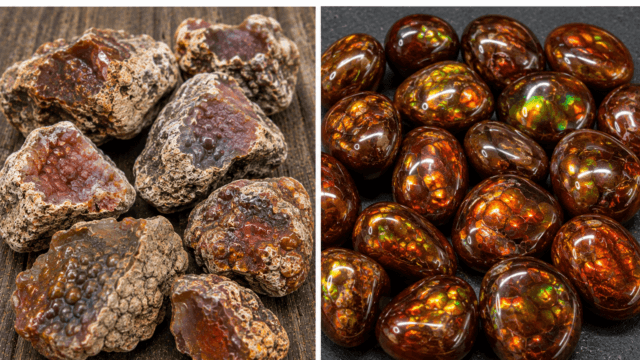
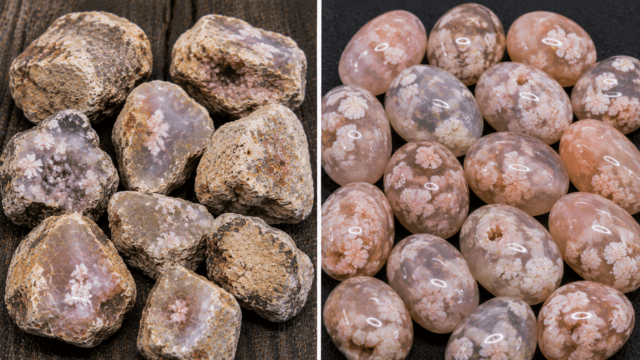
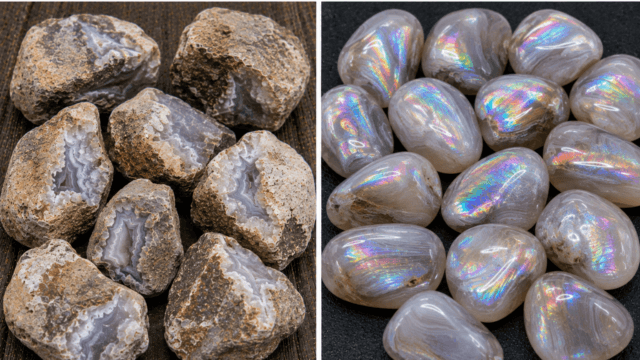
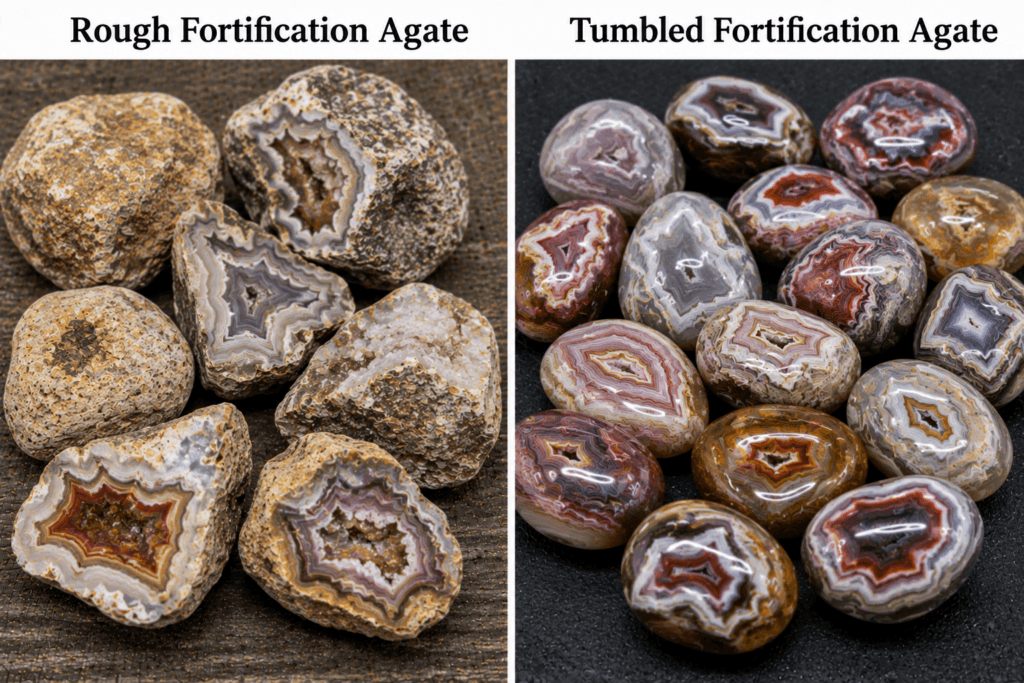
Rough Fortification Agate
Polished/Tumbled Fortification Agate
At a Glance
Also Known As: Banded Fortification Agate
Mineral Family: Quartz (Chalcedony)
Chemical Formula: SiO₂
Crystal System: Trigonal (Microcrystalline)
Mohs Hardness: Approximately 6.5 to 7
Color(s): White, gray, cream, tan, brown, red, orange, yellow, pink, black, and combinations of these colors
Primary Chakra(s): Root Chakra
Secondary Chakra(s): Varies according to color
Zodiac Sign(s): Gemini, Virgo
Toxic: Generally considered non-toxic for normal handling
Water Safe: Generally safe for brief contact when natural and untreated
Elixir Safe: The indirect method is recommended, particularly when mineral inclusions, dyes, coatings, or treatments are unknown.
Overview
Fortification Agate is a patterned form of agate recognized by angular bands that repeatedly follow the shape of the cavity in which the stone formed. These bands often create geometric patterns resembling the walls, bastions, or defensive outlines of an old fortress when viewed in cross section.
Unlike names such as Botswana Agate or Agua Nueva Agate, which identify material associated with particular geographic sources, the term Fortification Agate primarily describes a pattern of agate formation. Fortification patterns can therefore occur in agates from many different locations.
The stone may contain layers of white, gray, cream, brown, red, orange, yellow, pink, or other colors depending on the minerals present during formation.
Within metaphysical traditions, Fortification Agate shares many of the grounding and stabilizing associations of the broader agate family. Its distinctive layered structure has also made it symbolically associated with boundaries, protection, resilience, structure, and developing a strong inner foundation.
Formation & Geological Information
Fortification Agate develops when silica-rich fluids enter a cavity within rock and deposit microscopic layers of chalcedony along its interior walls.
Rather than forming simple straight bands, each new layer follows the irregular outline of the cavity beneath it. As additional layers develop inward, the angular shape is repeated again and again.
When the agate is cut across these layers, the pattern can resemble the overhead plan of a fortified city or fortress. This appearance gave Fortification Agate its descriptive name.
The center may eventually fill completely with chalcedony or remain partially open. Some specimens contain crystalline quartz or druzy within the central cavity.
Because the striking fortification pattern develops inside the stone, a completely rough specimen may show little indication of the elaborate pattern hidden within. The angular bands usually become most obvious after the nodule has been naturally fractured, cut, or polished.
Where It Is Found
Fortification Agate is not restricted to one geographic deposit. The pattern occurs in agates from numerous locations around the world.
Notable agate-producing regions where fortification patterns may occur include:
Brazil
Uruguay
Mexico
United States
Argentina
Botswana
India
Madagascar
Germany
Some famous locality-specific agates, including Lake Superior Agate and Laguna Agate, can also display excellent fortification patterns.
Metaphysical & Spiritual Associations
Keywords: Protection • Boundaries • Stability • Grounding • Structure • Resilience • Inner Strength • Focus • Security
Fortification Agate is traditionally associated with stability and grounding, but its unusual pattern gives it additional symbolism centered around boundaries and protection.
Its repeating layers resemble walls built around a protected center. Because of this, the stone can symbolize developing healthy boundaries without completely closing oneself off from the world.
Metaphysically, it may be chosen by someone learning where their responsibilities end and another person’s begin. This can include emotional boundaries, energetic boundaries, relationships, work environments, or situations where someone has become accustomed to carrying the emotions or problems of others.
The stone is also associated with inner structure. Just as every band builds upon the layer before it, Fortification Agate can represent creating stability through repeated choices, routines, habits, and experiences.
It may be meaningful during periods when life feels disorganized or uncertain. Rather than searching for immediate answers, its symbolism encourages establishing a strong foundation and addressing circumstances one layer at a time.
Fortification Agate is also associated with resilience. Its many layers can represent the experiences that have strengthened a person over time. Difficult experiences do not need to become permanent walls, but they can teach us where stronger boundaries are necessary.
For meditation and personal reflection, the concentric patterns can provide a natural focal point. Following the bands visually toward the center may be used as a mindfulness exercise or as symbolism for moving inward toward one’s own thoughts, emotions, and intuition.
Within paranormal and intuitive work, Fortification Agate may be especially appealing as a symbolic boundary stone. Some practitioners may carry or place it nearby before mediumship, spirit communication, paranormal investigation, or energy work with the intention of remaining grounded and maintaining clear personal boundaries.
Its structure can also serve as a reminder that protection does not necessarily require fear. Healthy energetic practices can be based on awareness, intention, discernment, and knowing where one’s own energy begins and ends.
Chakra Associations
Fortification Agate is most commonly associated with the Root Chakra, which represents grounding, security, stability, physical presence, and a strong personal foundation.
Its symbolism of layers surrounding and protecting a center closely reflects themes traditionally associated with the Root Chakra.
Secondary chakra associations may vary according to the dominant colors within an individual specimen.
For example, red and orange varieties may be associated with the Root and Sacral Chakras, yellow specimens with the Solar Plexus Chakra, green or pink material with the Heart Chakra, and blue varieties with the Throat Chakra.
Zodiac Associations
Fortification Agate is commonly associated with Gemini and Virgo through the broader metaphysical traditions surrounding agate.
Gemini is traditionally associated with adaptability, curiosity, communication, and navigating multiple perspectives. Fortification Agate’s structured layers may symbolically provide grounding and focus when thoughts or circumstances become scattered.
Virgo is associated with organization, structure, practicality, discernment, and building stability through careful attention to detail. These qualities align naturally with the orderly layers found within Fortification Agate.
Because Fortification Agate describes a pattern rather than a single locality-specific mineral variety, zodiac correspondences are not universally standardized.
Traditional Wellness Associations
Within crystal healing traditions, Fortification Agate is associated with grounding, emotional stability, resilience, focus, and creating a greater sense of security.
It may also be used during meditation or mindfulness practices by people seeking emotional boundaries, structure, or a calmer response to overwhelming circumstances.
These are traditional metaphysical associations and do not indicate that Fortification Agate can treat physical or psychological conditions.
Disclaimer: Crystal healing is a spiritual practice and is not intended to diagnose, treat, cure, or prevent any medical condition. It should never replace professional medical advice, diagnosis, or treatment.
Safety
Toxicity: Natural Fortification Agate is generally considered safe for normal handling.
Water Safety: Natural, untreated agate is generally considered safe for brief contact with water.
Elixir Safety: The indirect method is recommended as the safest choice. Fortification Agate can originate from many different deposits and may contain unknown mineral inclusions, dyes, coatings, treatments, or polishing compounds.
Sunlight: Natural agate is generally stable under normal lighting conditions. Dyed material may fade with prolonged exposure to strong sunlight.
Buying Tips
The defining feature of Fortification Agate is its repeating angular banding. Look for layers that follow one another inward and create shapes resembling walls, geometric outlines, or the plan of a fortress.
Because Fortification Agate describes a pattern rather than a particular color or geographic origin, authentic specimens can look dramatically different from one another.
A rough agate nodule may not reveal its fortification pattern externally. The internal structure usually becomes visible after the specimen is broken, sliced, or polished.
Agates are also frequently dyed. Extremely bright pinks, purples, blues, or greens may indicate color enhancement, although naturally colorful agates do exist.
Did You Know?
The term “fortification” refers to the pattern’s resemblance to the defensive walls of old fortified cities and castles when viewed from above. Each angular band follows the shape of the layer before it, creating a natural geometric design entirely through geological processes.
Mystera Insight
Fortification Agate reminds us that boundaries are not meant to imprison us. They define the space in which we feel secure enough to grow. Every layer represents another lesson about what we allow into our lives, what we release, and what deserves protection. Strength is not about building walls so high that nothing can reach us. It is about knowing when to open the gate and when to keep it closed.
Related Crystals
Lake Superior Agate
Laguna Agate
Botswana Agate
Crazy Lace Agate
Condor Agate
Banded Agate
Onyx