Botswana Agate
Article
Images
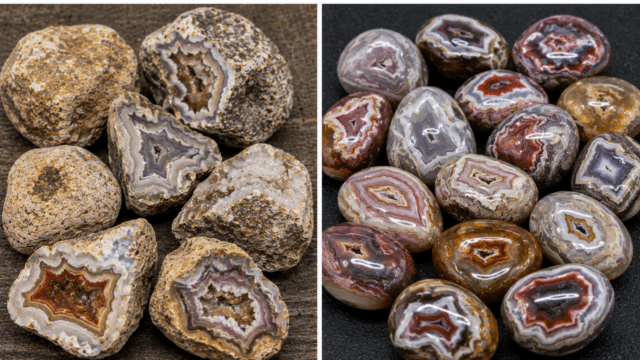
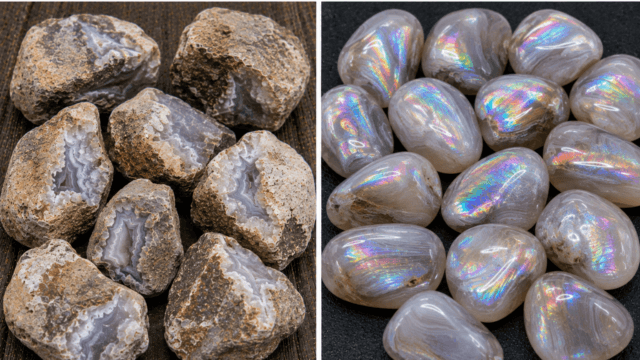
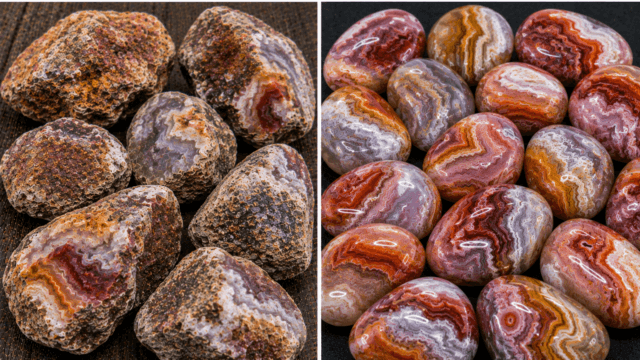
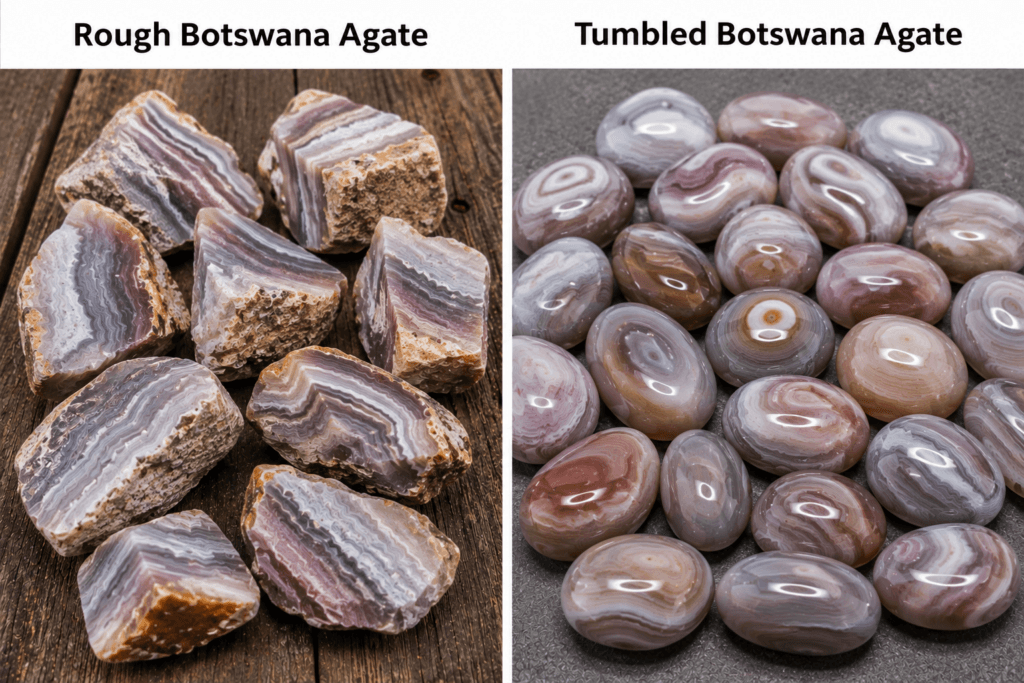
Rough Botswana Agate
Polished/Tumbled Botswana Agate
At a Glance
Also Known As: Botswana Stone
Mineral Family: Quartz (Chalcedony)
Chemical Formula: SiO₂
Crystal System: Trigonal (Microcrystalline)
Mohs Hardness: 6.5 to 7
Color(s): Gray, white, brown, tan, pink, peach, mauve, reddish brown, and occasionally soft purple tones
Primary Chakra(s): Root Chakra
Secondary Chakra(s): Sacral Chakra
Zodiac Sign(s): Scorpio
Toxic: No
Water Safe: Yes, when natural and untreated
Elixir Safe: The indirect method is the safest choice, especially when treatments, coatings, or inclusions are unknown.
Overview
Botswana Agate is a beautifully banded variety of agate known for its delicate layers of gray, white, brown, pink, peach, and mauve. Its intricate patterns may appear as fine parallel bands, swirling formations, eyes, or abstract landscapes.
Named for Botswana in southern Africa, where notable deposits occur, this agate is especially prized for its subtle coloring and exceptionally detailed banding.
Within metaphysical traditions, Botswana Agate is often regarded as a comforting and stabilizing stone. It is associated with emotional balance, resilience, grounding, and finding the strength to move forward during difficult periods or major life transitions.
Formation & Geological Information
Botswana Agate formed within cavities in ancient volcanic rock. Silica-rich fluids entered these openings over long periods of time, gradually depositing microscopic layers of chalcedony.
Changes in mineral content and environmental conditions during formation created the extremely fine bands and variations of color for which Botswana Agate is known.
Like other agates, Botswana Agate is a variety of chalcedony, which is a microcrystalline form of quartz.
Where It Is Found
Botswana Agate is primarily associated with Botswana, a landlocked country in southern Africa.
The material is especially valued because of the distinctive banding and muted color combinations produced by deposits from this region.
Metaphysical & Spiritual Associations
Keywords: Comfort • Emotional Balance • Grounding • Resilience • Strength • Transition • Hope • Stability
Botswana Agate is traditionally associated with comfort, emotional stability, and the strength needed to move through challenging periods. Its energy is often described as gentle and reassuring rather than intense, making it a popular stone for people who feel emotionally overwhelmed or are navigating significant changes in their lives.
It is sometimes called a stone of change because of its association with accepting transitions while remaining grounded. Rather than resisting what is ending or changing, Botswana Agate is traditionally used with the intention of helping a person recognize possibilities that may exist beyond their current circumstances.
This stone is also associated with resilience and emotional maturity. Metaphysical practitioners may work with Botswana Agate when trying to understand difficult experiences from a broader perspective, release unhealthy emotional patterns, or regain a sense of stability after disappointment or loss.
Botswana Agate has also developed a traditional association with overcoming habits and behaviors that no longer serve a person. It is sometimes used as a supportive stone when breaking repetitive patterns, developing healthier routines, or strengthening personal determination.
Spiritually, Botswana Agate is often used for quiet reflection and meditation. Its intricate layers can symbolically represent the many experiences and stages that shape a person’s life, encouraging patience with the process of personal growth.
For intuitive and energy work, Botswana Agate may be used as a grounding companion before or after meditation, mediumship, paranormal investigation, or other spiritually focused practices. Its traditional association with grounding can make it useful for those who want to explore intuitive awareness while maintaining a strong connection to the physical world.
Chakra Associations
Botswana Agate is primarily associated with the Root Chakra, which represents grounding, stability, security, and connection to the physical world.
Its warmer pink, peach, brown, and reddish tones are also sometimes associated with the Sacral Chakra, which relates to emotions, creativity, pleasure, relationships, and the ability to adapt to change.
Because individual specimens can vary considerably in color, some practitioners also work with the colors present in their particular stone when determining chakra associations.
Zodiac Associations
Botswana Agate is most commonly associated with Scorpio.
Scorpio is traditionally connected with transformation, emotional depth, resilience, and the process of releasing what has ended so something new can emerge. These themes closely reflect Botswana Agate’s metaphysical association with navigating change and finding stability during periods of personal transformation.
Traditional Wellness Associations
Within crystal healing traditions, Botswana Agate is commonly associated with emotional comfort, relaxation, resilience, and maintaining stability during stressful or uncertain periods.
It has also traditionally been used as a supportive stone by people attempting to change unwanted habits or repetitive behaviors. Some crystal healing traditions specifically associate Botswana Agate with support during efforts to stop smoking.
These associations are metaphysical traditions and should not be interpreted as evidence that Botswana Agate can treat addiction, withdrawal, anxiety, or any other medical condition.
Disclaimer: Crystal healing is a spiritual practice and is not intended to diagnose, treat, cure, or prevent any medical condition. It should never replace professional medical advice, diagnosis, or treatment.
Safety
Toxicity: Botswana Agate is generally considered non-toxic and safe to handle.
Water Safety: Natural, untreated Botswana Agate is generally considered safe for brief contact with water.
Elixir Safety: Because individual specimens may contain unknown inclusions, dyes, coatings, polishing compounds, or other treatments, the indirect method is the safest choice for preparing crystal elixirs.
Sunlight: Natural Botswana Agate is generally stable in normal sunlight. Prolonged exposure should still be avoided when the treatment history of a specimen is unknown.
Buying Tips
Authentic Botswana Agate is known for its exceptionally fine banding and subdued natural colors. Look for layers of gray, white, brown, tan, pink, peach, mauve, or reddish brown.
Some specimens contain distinctive circular or oval patterns known as “eyes,” while others display flowing bands or formations resembling miniature landscapes.
Highly saturated or unnaturally bright colors may indicate that an agate has been dyed. When authenticity matters, purchase from a reputable mineral or gemstone seller and ask whether the material has been treated or color enhanced.
Did You Know?
Botswana Agate is famous for the remarkable precision of its natural banding. Some specimens contain hundreds of extremely thin layers, preserving a visual record of repeated mineral deposition that occurred during the stone’s formation.
Mystera Insight
Botswana Agate carries a powerful reminder within its layers. Change does not erase what came before it. Every experience becomes another layer of who we are. When life shifts unexpectedly, we can carry the wisdom of where we have been without allowing the past to determine where we go next.
Related Crystals
Agua Nueva Agate
Crazy Lace Agate
Laguna Agate
Fire Agate
Moss Agate
Tree Agate
Smoky Quartz